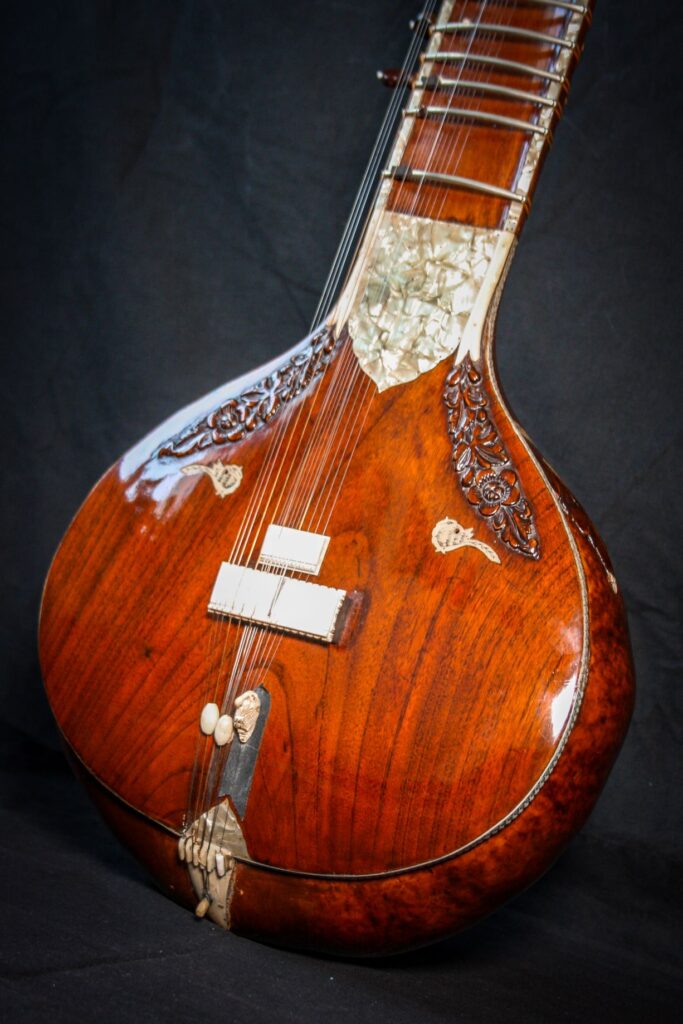
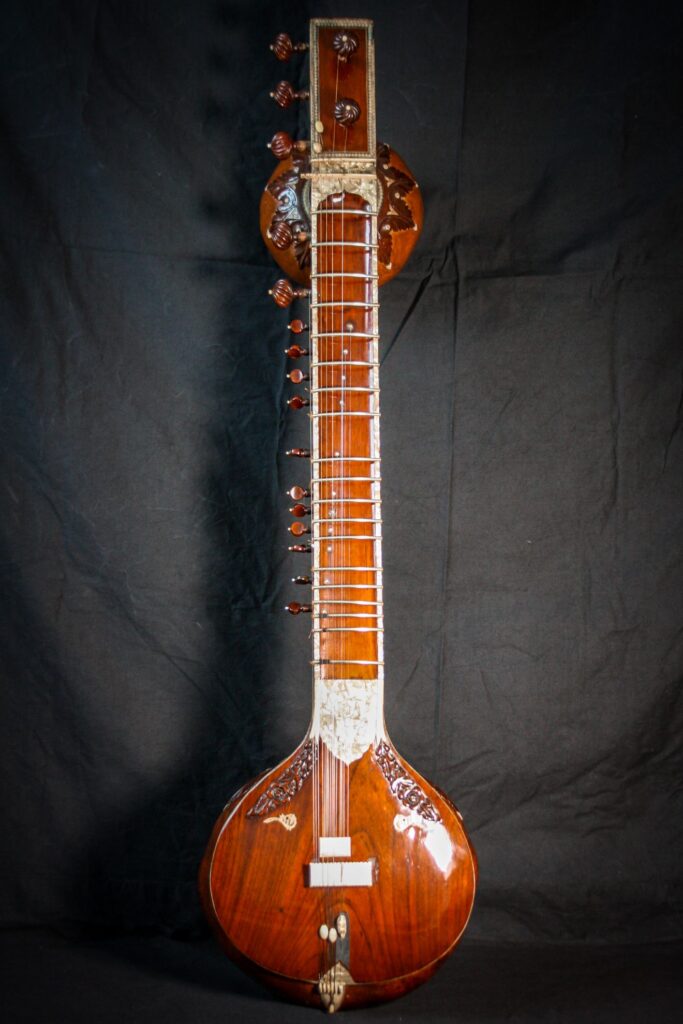
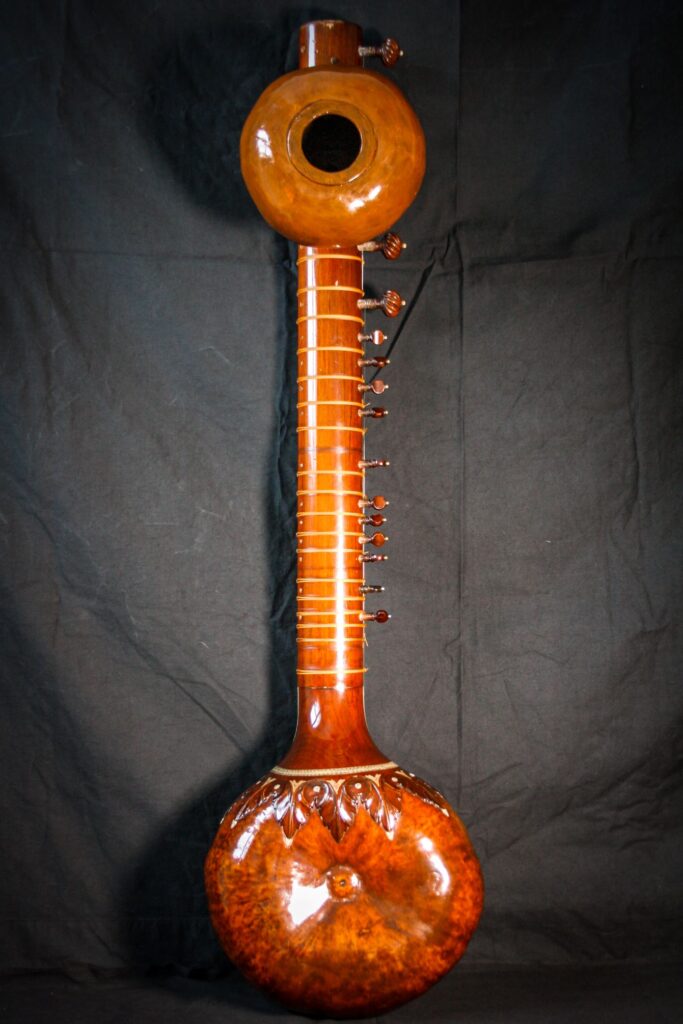
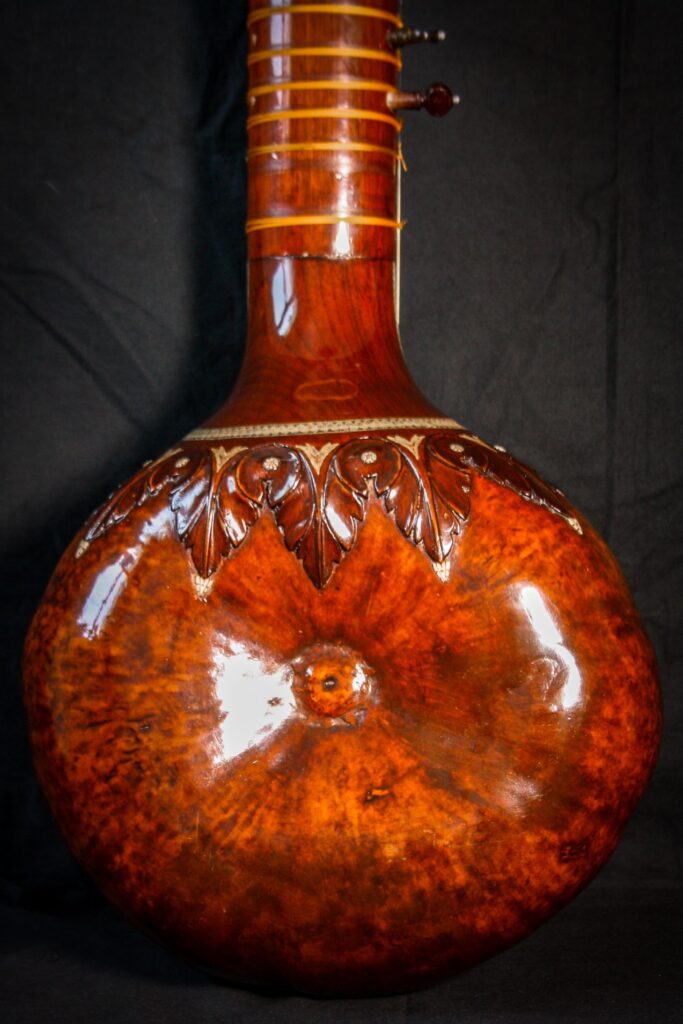
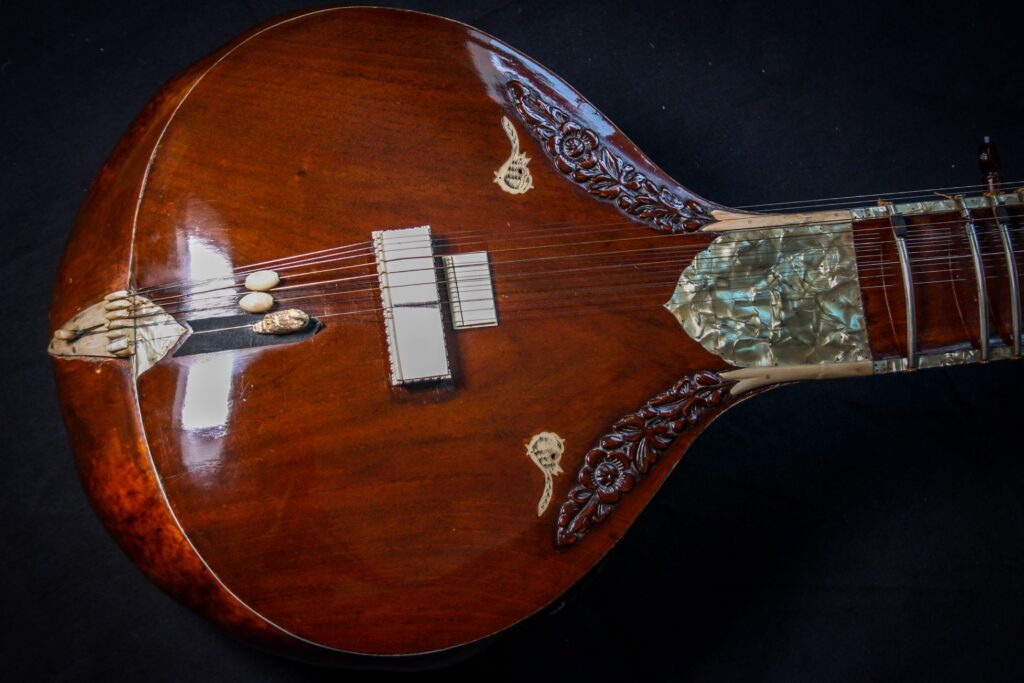
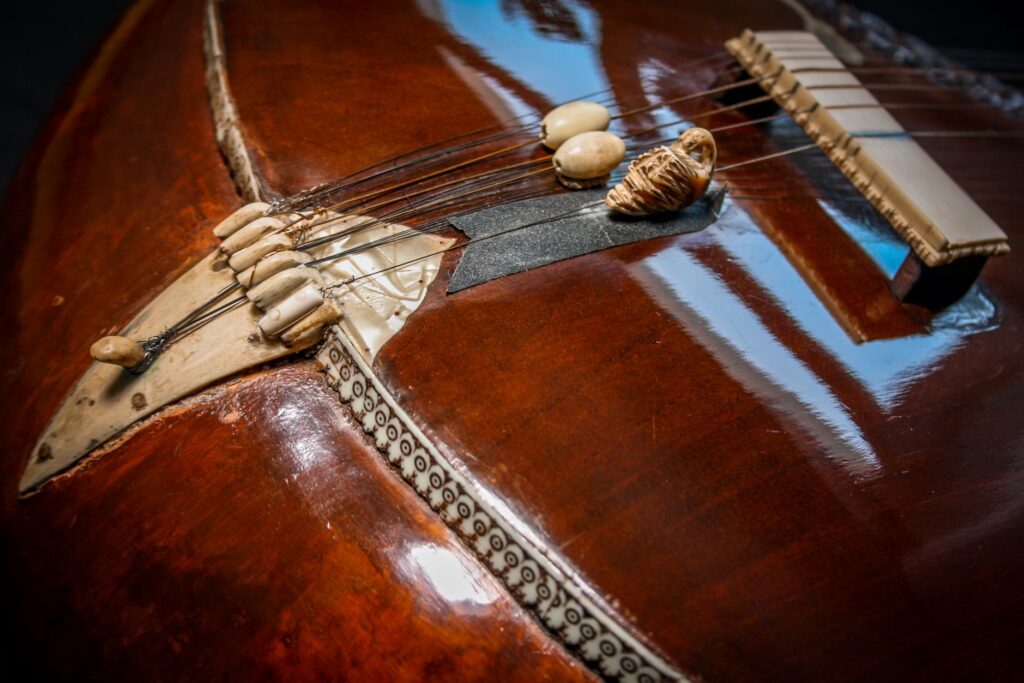
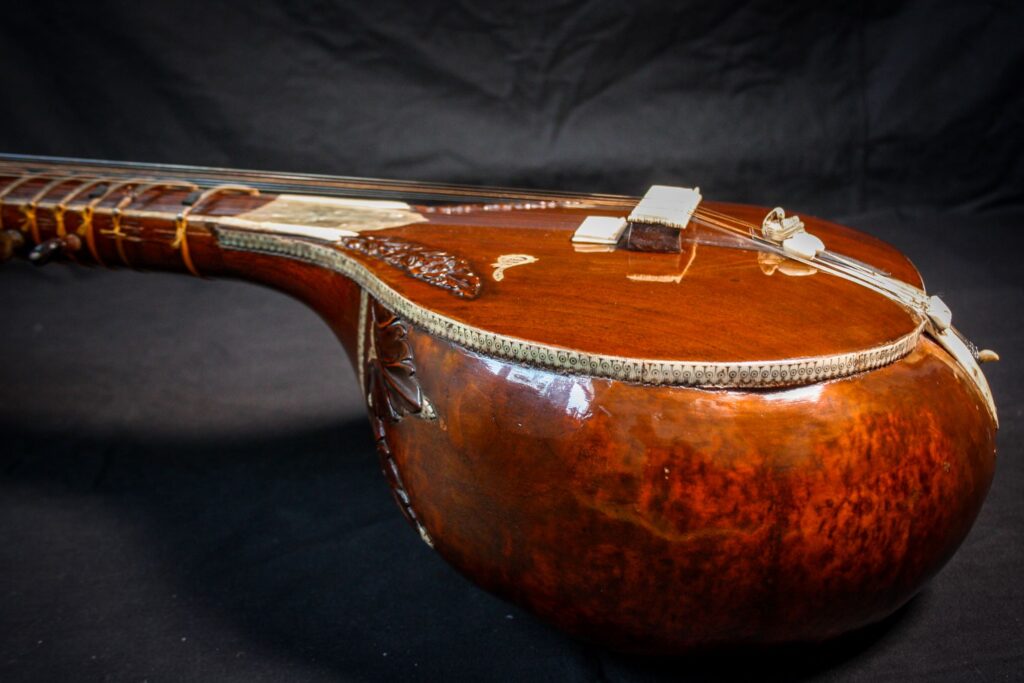
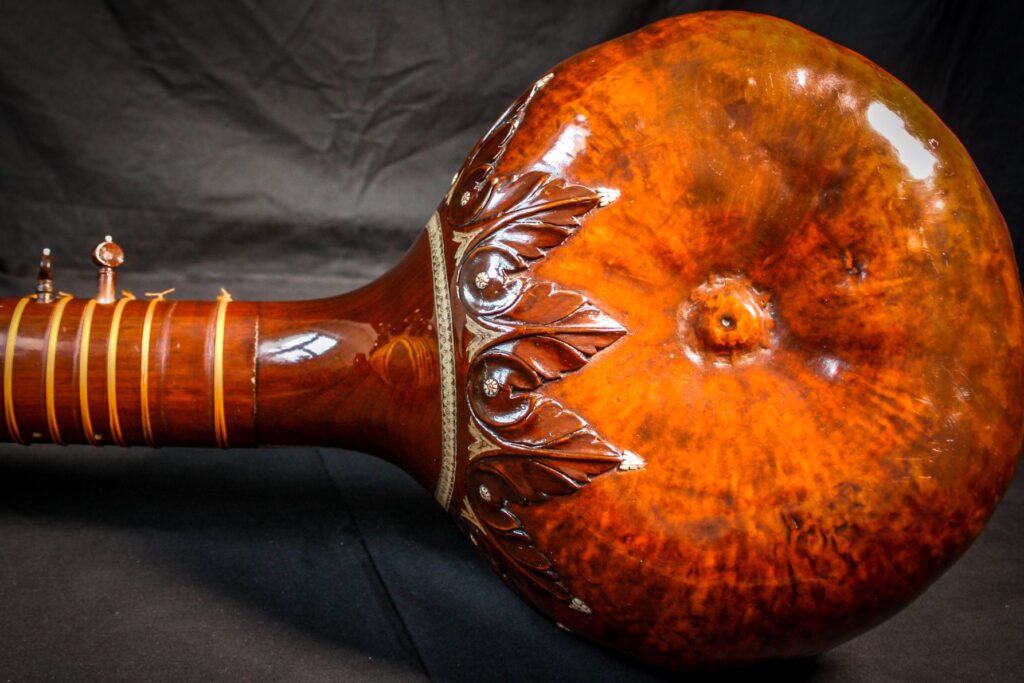
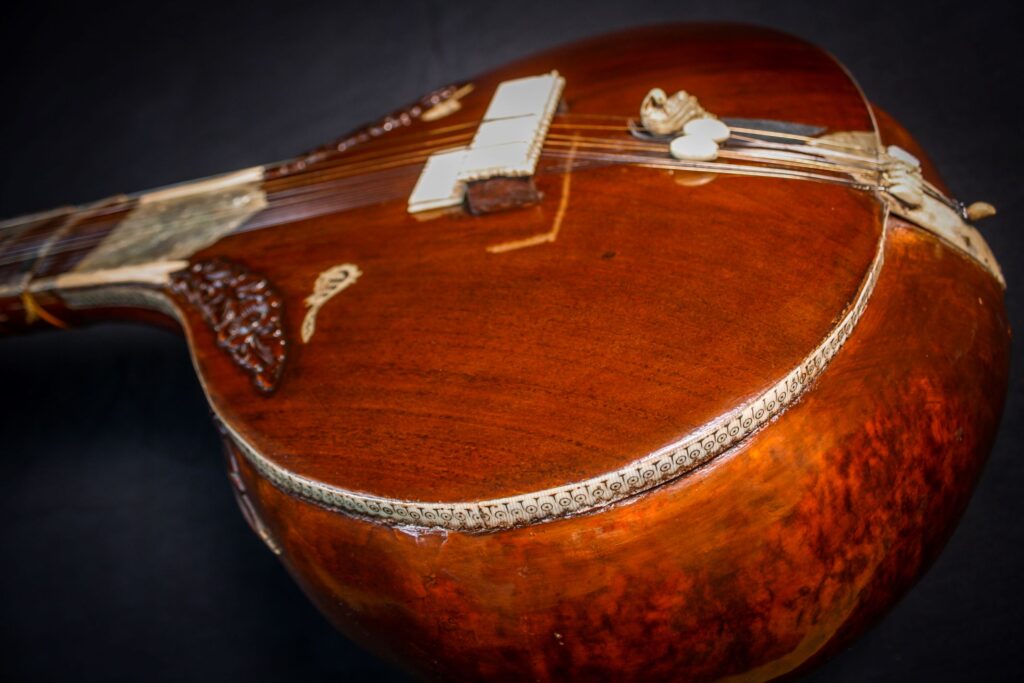
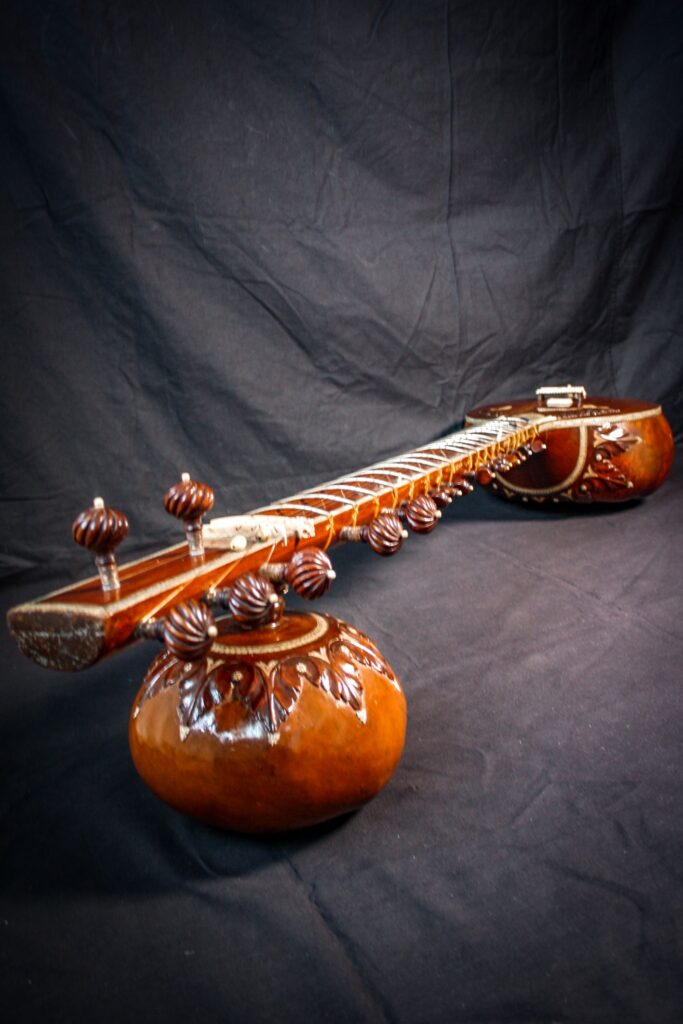
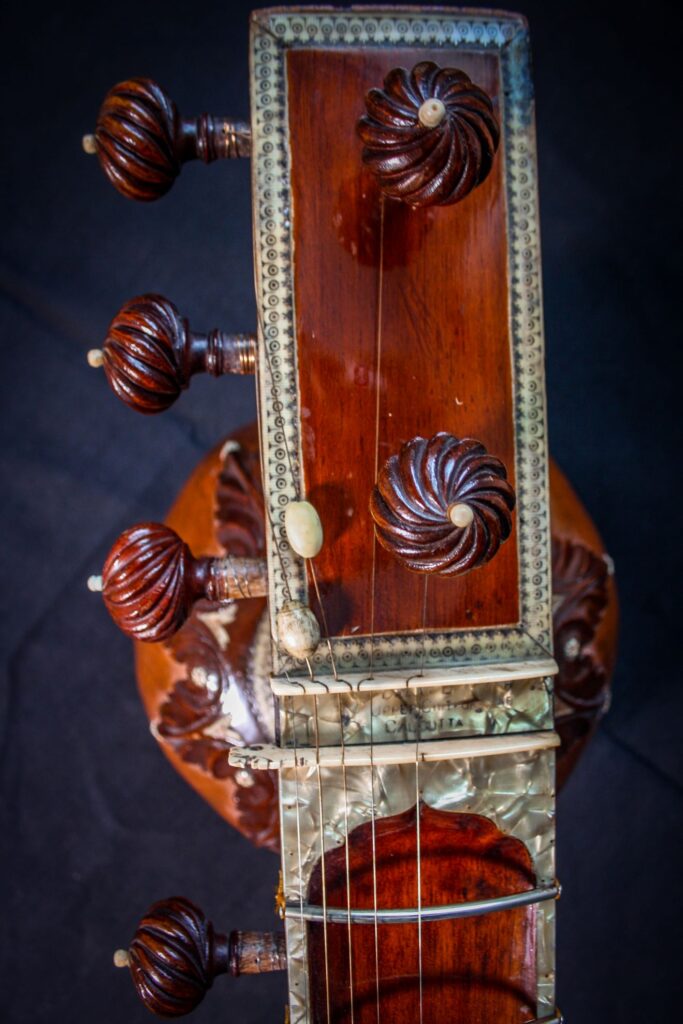
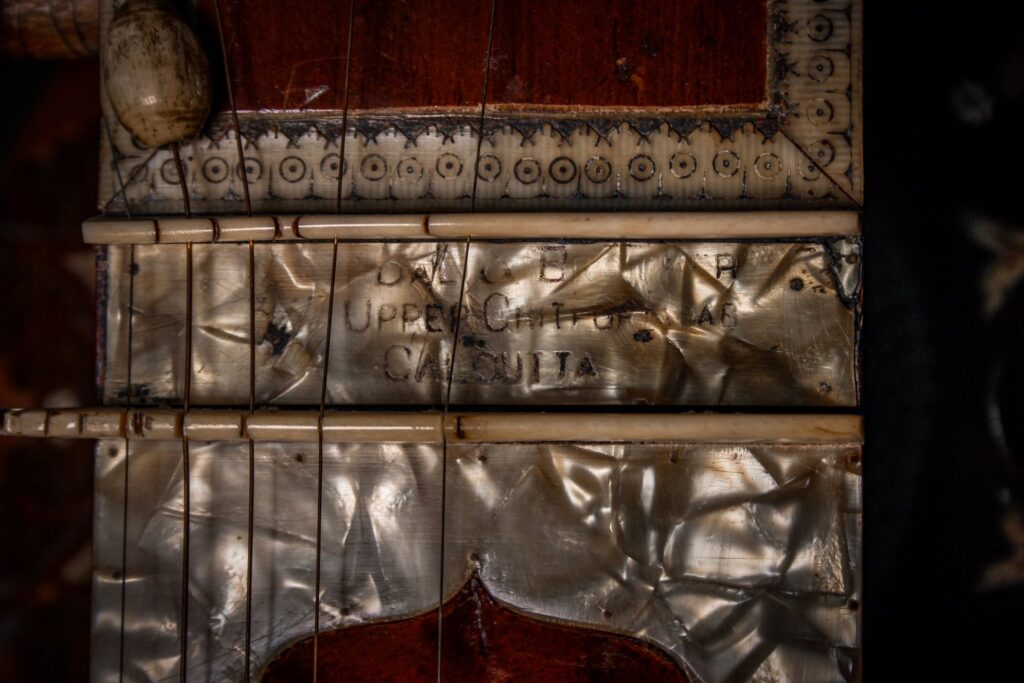
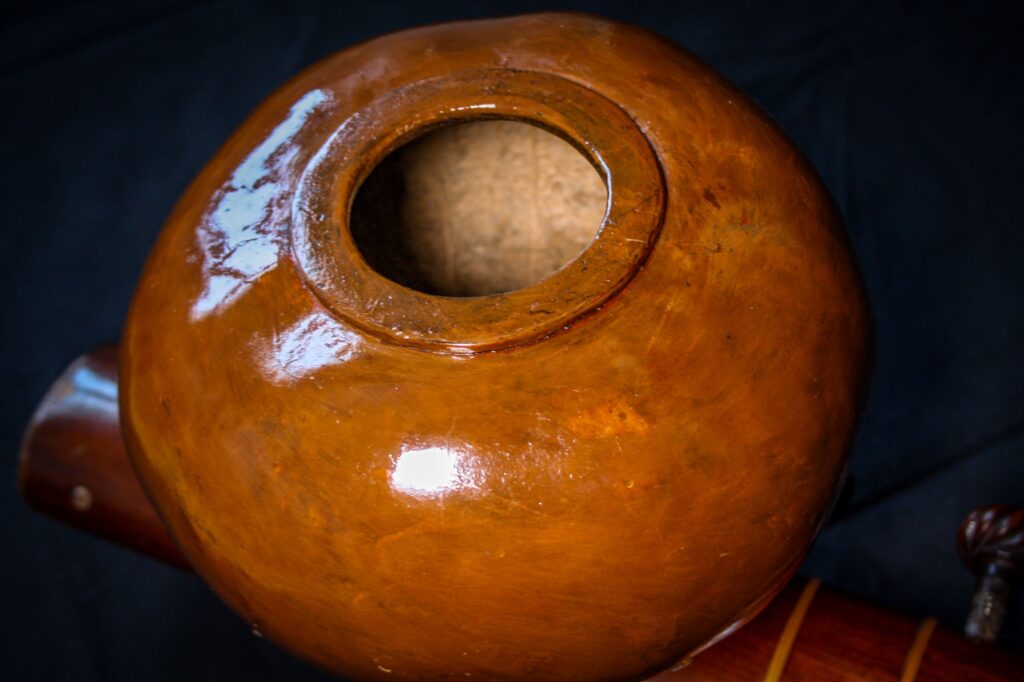
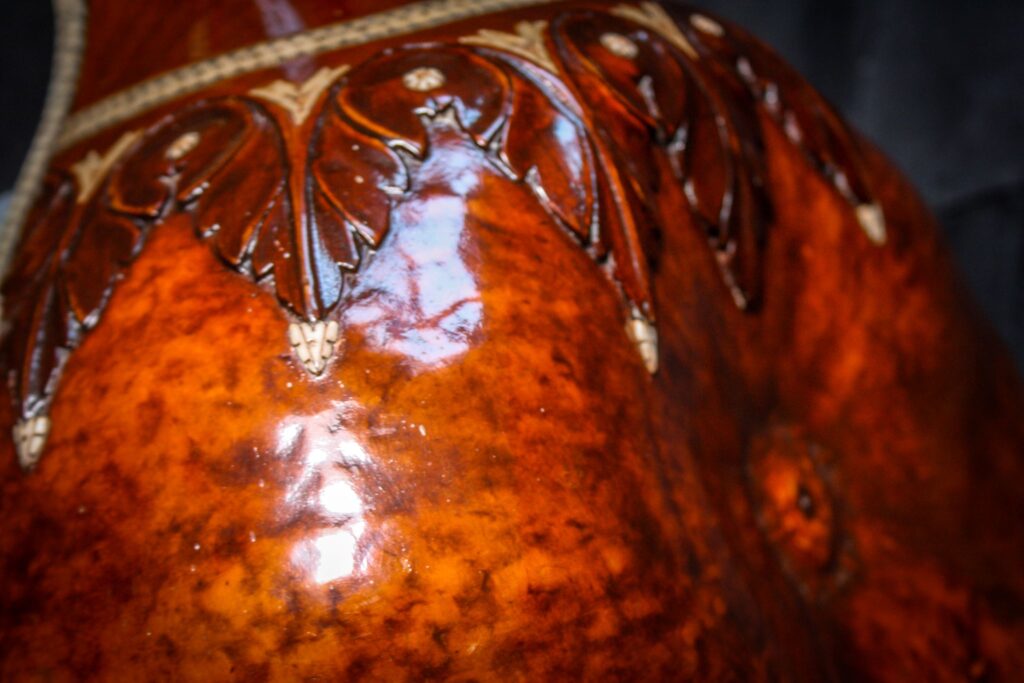
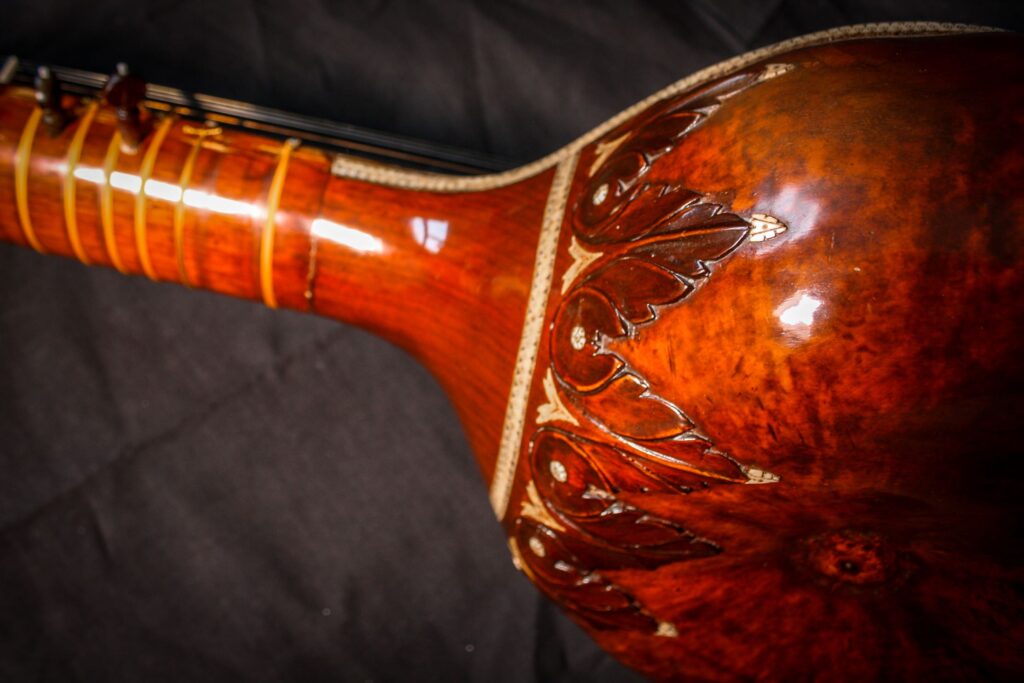
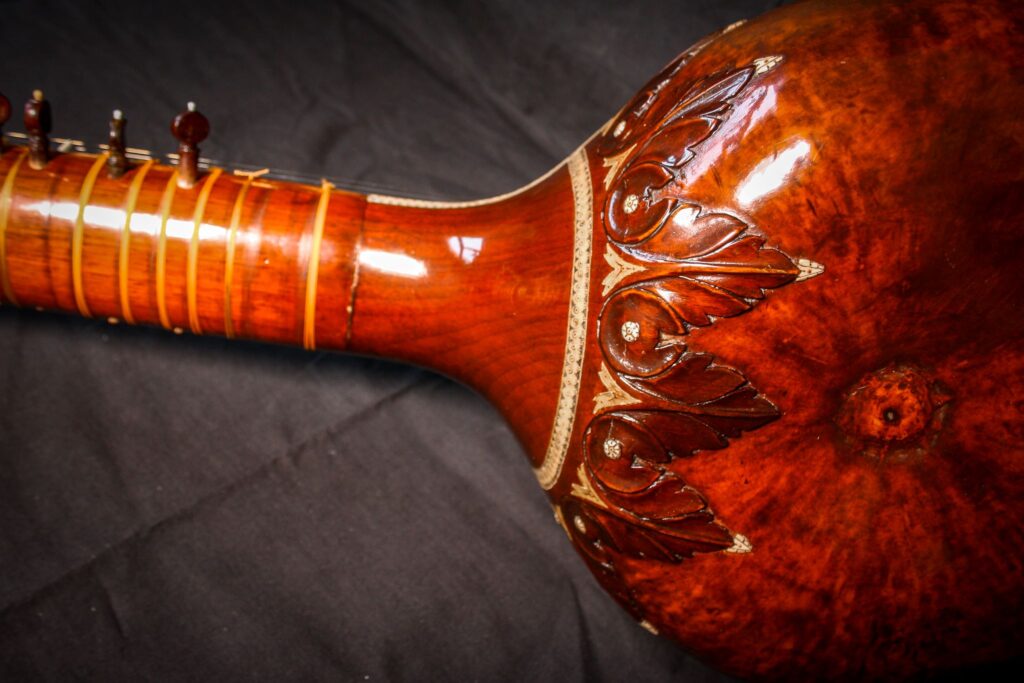
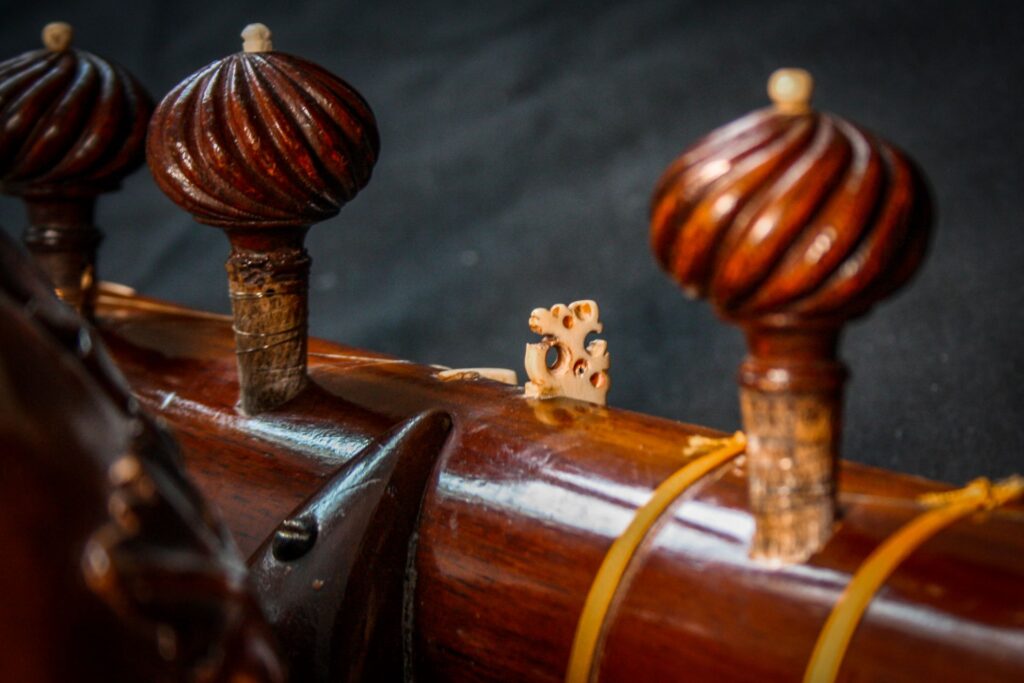
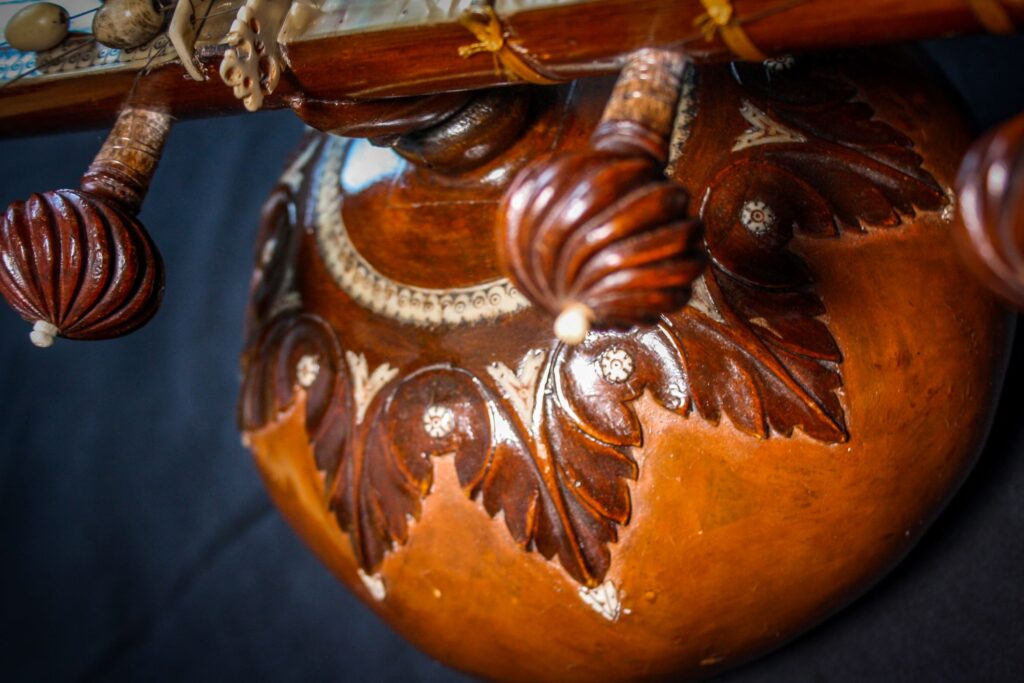
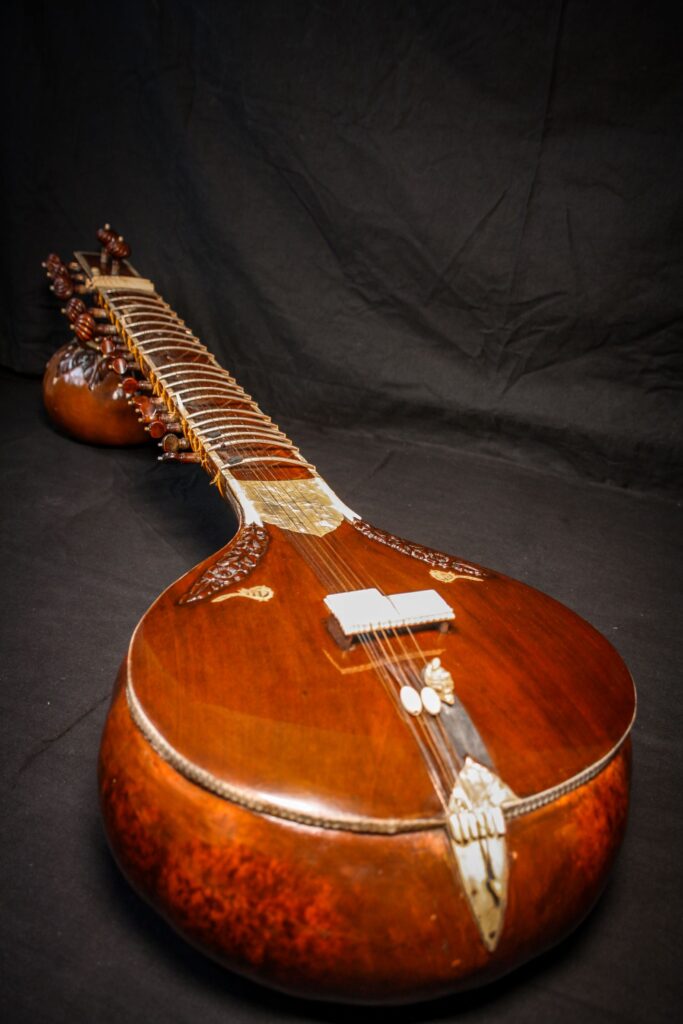
A very unique sitar that allows a glimpse into the old-world sound-aesthetics. This flatback type of sitar is more akin towards Surbahar and was more popular in the distant past where it was known as Kachhapi Vina: „an ancient Indian stringed instrument named for its tortoise-like shape, featuring a large, flat resonator (like a tortoise shell) and a long neck, known from Vedic texts and related to more modern instruments like the Kachhua Sitar or Surbahar, representing an early form of the lute family in India.“ This sitar has a very thin soundboard and is therefore very loud. A clear indicator of its pre-microphone-era origin. The carving is very minimal but delicate and beautiful. In terms of sound it is very unique: loud and resonant with an instant attack that fills up the room with a beautiful low end and silky highs. Toon-wood, original horn bridges, original upper tumba, 11 taraf strings, half decoration, kharaj-string hook on last fret.
| SPECIFICATION | MEASUREMENT |
| Total length | 133 cm |
| Scale length | 89.5 cm |
| Bridge height | 1.9 cm |
| String height over last fret | 10.5 mm |
| Neck width | 8.6 cm |
| Tabli diameter | 33.4 cm |
| Toomba circumference | 92 cm |
| Weight (without upper tumba) | 1.83 kg |
| Meend range (at C# tuning) | S → M tivra ; P → r‘ |